




Investing in CRM software is only half the battle. The majority of CRM implementations struggle not because of the technology, but because of how the rollout is managed — and six failure points appear over and over.
Without visible executive ownership, CRM initiatives lose urgency and priority mid-rollout. When leadership does not reinforce adoption expectations, employees treat the system as optional — and it becomes one.
Configuring a CRM before defining success metrics leads to a system that technically works but solves the wrong problems. Poorly defined objectives mean no way to measure ROI — or to course-correct when things go wrong.
Dropping users into a new system without structured training creates immediate frustration. Without training that maps to their actual daily tasks, employees revert to spreadsheets and email threads within weeks of go-live.
Rushing data migration without test validation corrupts records, breaks relationships between objects, and destroys user trust in the platform before adoption even begins. Bad data is worse than no CRM at all.
Configuring CRM workflows based on assumptions rather than actual business process mapping produces a system that fights how teams work — creating friction that drives abandonment and resistance from day one.
When employees are not involved in the rollout process, they feel the CRM was imposed on them rather than built for them. Poor communication and lack of early involvement turn potential champions into vocal resistors.
A phased approach built for real business — dividing implementation into four structured 10-day phases, each with defined milestones, clear ownership, and specific deliverables that build directly on each other.
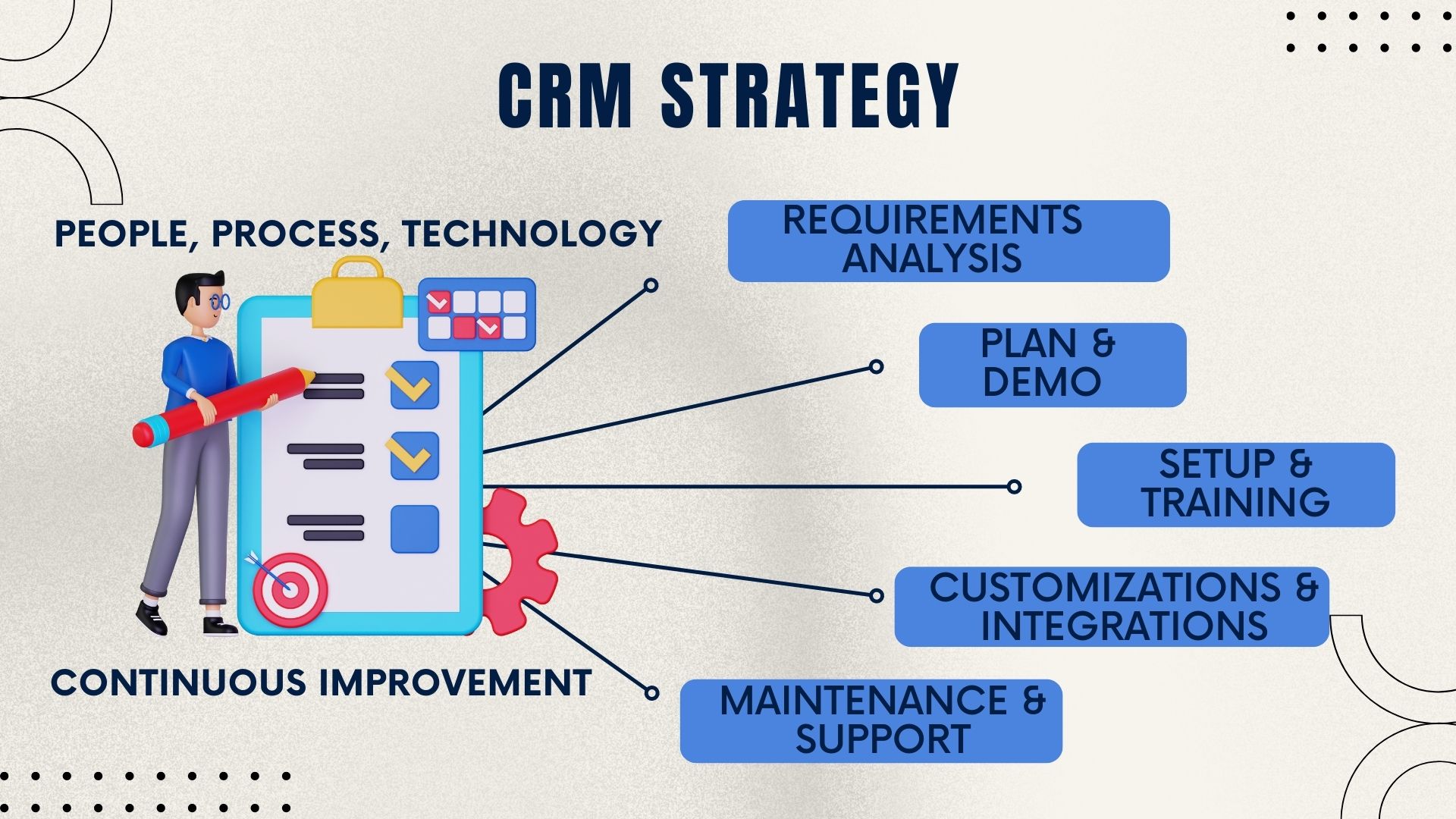
Each phase has a distinct focus, ensuring the right work happens in the right order — and that nothing critical gets skipped in the rush to reach the go-live date.
With 22+ years of CRM implementation experience across 159 countries, Salesboom brings a depth of rollout expertise that generic CRM vendors simply cannot match.
A structured, battle-tested framework built on 22+ years of real-world CRM implementation experience across 3,500+ organizations — not a theoretical checklist assembled from blog posts.
Expert CRM specialists — not chatbots or generic help desk agents — guide your team through every phase, from kickoff planning through post-launch optimization and ongoing performance monitoring.
Pre-built workflow templates accelerate Phase 2 configuration and ensure your CRM reflects proven best practices for your specific industry — reducing build time and improving configuration accuracy.
Native Outlook and QuickBooks integration out of the box, plus an open API architecture for connecting existing ERP, marketing automation, and support platforms without costly custom development work.
No hidden implementation fees, no vendor lock-in, and predictable monthly pricing starting at $14 per user. Your rollout budget stays on track because costs are known from day one of the engagement.
Organizations across 159 countries have used Salesboom to successfully implement CRM and transform their operations — bringing that accumulated institutional knowledge to every new rollout engagement.
A structured CRM implementation is not just about going live on time — it is about building a centralized business platform that compounds in value over months and years.
When CRM is properly implemented, leaders gain full visibility into sales pipelines, service queues, and customer health — in real time, without asking anyone for a status update or waiting for a weekly report.
A well-configured CRM breaks down silos between sales, service, and marketing — putting every team on the same page with shared customer data, unified communication histories, and coordinated workflows.
Businesses fear outgrowing their CRM as they scale. With Salesboom's modular architecture, additional functionality, users, and integrations can be added at any stage without costly reimplementation or platform migration.
Every CRM implementation carries risk. Salesboom's 40-day framework is specifically designed to surface and neutralize those risks before they become expensive, momentum-killing problems.
Executive kickoff and stakeholder alignment eliminate conflicting expectations before any configuration work begins — ensuring every group understands the project's goals, timeline, and their specific role in the rollout.
Business process mapping and administrator training ensure the platform is built to reflect real workflows, not assumptions — reducing post-launch change requests that erode user confidence in the system.
Test migrations and structured validation protocols catch field mapping errors and corrupt records before full import — preventing the trust-destroying experience of finding dirty data on the first day of go-live.
Structured training, usage monitoring, and feedback loops identify and address adoption gaps before they become permanent habits — turning post-launch data into targeted interventions rather than wishful thinking.
Early technical review and phased integration planning prevent last-minute connection failures that delay go-live — ensuring critical system connections are validated before users depend on them for daily work.
Comprehensive documentation of configuration decisions, field mappings, and workflow logic across every phase protects the implementation investment from staff turnover and organizational changes down the line.
Straightforward answers to the most common CRM implementation questions — based on 22+ years of real-world rollout experience across 3,500+ organizations worldwide.
Dive deeper into the support resources, implementation guides, and documentation that help you deploy, configure, and optimize your Salesboom CRM successfully.

Review Salesboom's CRM service level agreement — detailing uptime commitments, response time guarantees, and the support standards your implementation will be backed by from day one.

Access Salesboom's comprehensive CRM implementation guide — a deep-dive resource covering configuration best practices, workflow setup, and administrator tips for every stage of the deployment process.

Explore available CRM implementation plans — structured service packages that match your organization's complexity and timeline requirements, from self-guided rollouts to fully managed deployments.

Find clear answers to common questions about user counts, billing, and plan options in Salesboom's CRM licensing frequently asked questions — so your implementation budget planning starts with accurate information.

Review Salesboom's answers to common data networking and security questions — covering infrastructure, encryption, data residency, and the protections your customer data receives from day one of implementation.
Get a personalized walkthrough of the Salesboom 40-day CRM implementation framework and see how our specialists guide your team from Day 1 to a fully adopted, revenue-driving CRM platform.
Questions? Call: 1-855-229-2043
Discover powerful CRM editions to scale your business efficiently.
A complete CRM suite with Marketing Automation, ERP integration, and Support tools — built for performance and value.
Explore ProfessionalFor large enterprises — automate workflows, unify data, and leverage analytics to drive strategic growth.
View EnterprisePerfect for small teams starting with CRM — manage leads, track sales, and boost productivity with simplicity.
Discover Team