
Loading
Loading




Discover the five structural reasons CRM initiatives collapse, and how Salesboom's cloud-native platform eliminates every failure vector for sustainable business growth.
Customer Relationship Management failure is rarely caused by poor software alone. It is the result of structural misalignment between technology, strategy, cost structure, organizational culture, and deployment methodology.
Budget overruns and prolonged deployment timelines with no measurable ROI destroy organizational confidence in CRM before the system ever delivers value.
Low user adoption renders even sophisticated systems dormant — turning multimillion-dollar platforms into expensive, underused databases that no one trusts.
Heavy customization blocks future upgrades, creating version lock-in that forces organizations to choose between functionality and stability at every release cycle.
Treating CRM as a software purchase rather than a transformation initiative produces systems that are technically functional but strategically disconnected from business goals.
Escalating operational complexity drains resources instead of freeing them — turning what should be an efficiency engine into a maintenance burden that grows year over year.
Salesboom's cloud-native platform was architected specifically to eliminate these systemic liabilities — delivering rapid deployment, transparent pricing, and AI-driven automation from day one.
Historically, CRM implementations — particularly traditional, on-premise models — have experienced significant failure rates due to systemic issues embedded within their architecture and execution models.
Traditional CRM implementations required dedicated consultants, system engineers, custom IT programming, and extensive integration cycles. Deployments could take years before producing measurable ROI.
Traditional CRM systems imposed heavy financial burdens that compounded well beyond initial licensing fees — eroding executive patience and shortening the window for demonstrating ROI.
On-premise CRM platforms required heavy customization to align with company workflows. What began as a necessary adaptation became a structural liability that trapped organizations in version lock-in.
Human resistance to change is predictable. When CRM systems are complex, non-intuitive, and disconnected from daily workflow, employees disengage — creating a self-reinforcing failure loop.
Perhaps the most critical failure point: organizations that treat CRM purely as a software purchase rather than a strategic transformation initiative are significantly more likely to fail. Software supports strategy — it does not replace it.
A customer-centric operating philosophy
A cross-functional alignment framework
A process automation strategy at scale
A revenue optimization model for growth
To address these systemic weaknesses, CRM architecture must evolve beyond traditional on-premise models. Salesboom's cloud-native CRM + ERP SaaS platform offers a fundamentally different structural approach designed to eliminate every legacy failure vector.
Subscription-based pricing replaces unpredictable capital expenditure with predictable monthly costs. No hardware infrastructure, no perpetual licensing, no consultant-heavy deployment cycles.
Sales, service, and operations live in a single data environment — eliminating the silos that create revenue gaps at every team handoff across the customer lifecycle.
No dedicated IT programming dependency — workflow engines, dashboards, and automation rules are configured through guided interfaces, keeping every implementation upgrade-safe.
Vertical-ready workflow templates replace consultant-heavy configuration cycles — compressing time-to-value from years to weeks without sacrificing operational depth.
Platform improvements are delivered automatically every quarter without system disruption or version lock-in — eliminating the upgrade paralysis that traps traditional CRM users.
The unified data model provides the rich, consistent foundation that advanced AI capabilities require — avoiding the technical debt that prevents competitors from delivering true AI-native experiences.
Modern CRM success requires a fundamentally different deployment philosophy. Speed is not simply a convenience — it is a risk mitigation strategy. The longer a deployment extends, the greater the probability of strategic drift, budget erosion, and user disengagement.
Salesboom's rapid deployment model compresses timelines from multi-year cycles into weeks — removing every traditional bottleneck that historically turned ROI from a certainty into a gamble.
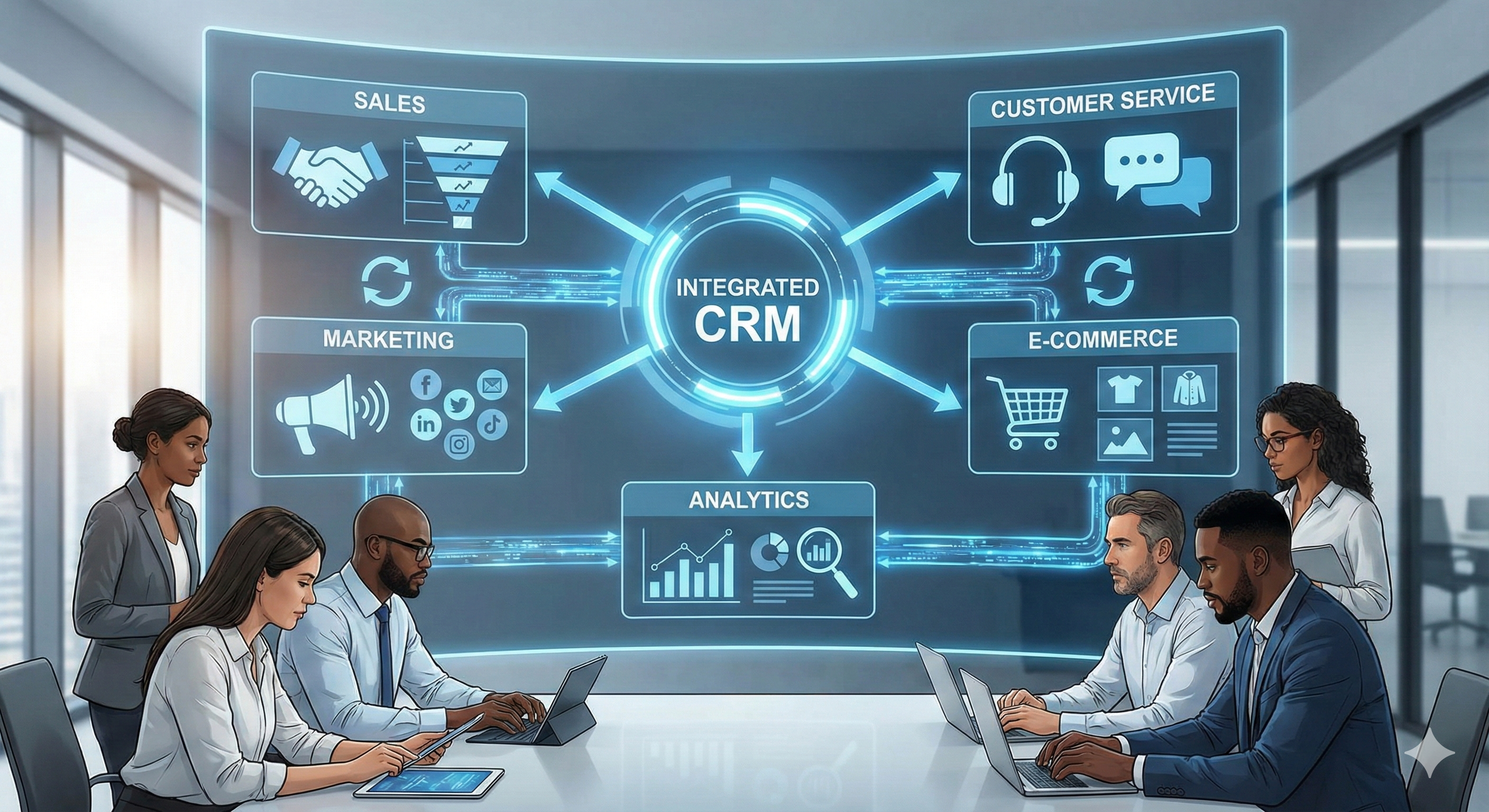

A CRM system that employees avoid is not a CRM system — it is an expensive data gap. Salesboom's platform is architected around user experience principles that make adoption organic rather than enforced.
When employees find value in the system, adoption becomes self-reinforcing. The difference between these outcomes is user-centric architecture — built into every layer of Salesboom's platform.
Sustainable CRM success requires organizational alignment across five strategic pillars. Technology is only one component. Organizations that invest in all five pillars dramatically outperform those that focus exclusively on software selection.
Leadership must treat CRM as a transformation initiative, not a software project. Executive sponsorship and visible leadership engagement are non-negotiable prerequisites for organization-wide adoption.
Business workflows must be documented and optimized before automation. Automating a broken process produces broken results at scale. Salesboom begins with process mapping workshops aligned to real operational requirements.
Training, feedback loops, and cultural reinforcement are essential. Salesboom's People-as-a-Service support model provides continuous coaching from dedicated CRM specialists throughout the customer lifecycle.
CRM and ERP data must operate in a shared environment to deliver complete organizational visibility. Salesboom's unified architecture eliminates silos — every team operates from the same source of truth.
Quarterly iteration transforms CRM from a static deployment into a living system. Salesboom delivers quarterly feature updates, AI enhancements, and integration expansions at no additional cost.
The next generation of CRM has moved beyond contact management and pipeline tracking. The future belongs to platforms that function as adaptive intelligence — learning from every interaction, predicting outcomes, and orchestrating revenue across the entire customer lifecycle.
AI anticipates pipeline gaps before they impact revenue — giving leadership the visibility to make confident resource and growth decisions weeks ahead of traditional reporting cycles.
Eliminates manual process execution entirely — intelligent automation handles routine tasks while human teams focus exclusively on high-value customer interactions and strategic decisions.
Prioritizes retention investment intelligently by continuously modeling the economic value of each customer relationship — directing attention where it generates the highest long-term return.
Connects sales, service, and marketing touchpoints in real time — ensuring no revenue opportunity falls through the cracks at the handoffs between organizational functions.
Industry-specific intelligent workflow templates reduce time-to-value for vertical deployments — delivering immediate operational relevance without months of custom configuration.
Proactively detects at-risk customers through sentiment analysis and behavioral signals — triggering retention workflows at the moment they matter, before churn becomes inevitable.
With 22+ years of CRM innovation, Salesboom delivers structural advantages that directly address every traditional CRM failure vector.
Single platform for CRM and ERP — no separate apps, no data silos, and complete visibility across the entire revenue lifecycle from first contact to renewal.
Transparent pricing starting at $14/user/month with no hidden fees, no hardware costs, no perpetual licensing, and no vendor lock-in — eliminating TCO as a barrier to sustained adoption.
Industry-specific workflow templates and configurable engines replace consultant-heavy implementations — reducing time-to-value from years to weeks without sacrificing depth.
In-house development team delivers AI features, integrations, and capability expansions every quarter at no extra cost — no version lock-in, no upgrade fees, no stagnation.
Expert support from real CRM specialists available 24/7 — not chatbots — ensuring adoption barriers are removed through human guidance, not automated scripts that loop endlessly.
3,500+ businesses across 159 countries trust Salesboom's architecture to power their revenue operations — a 22-year track record built on implementation success, not promises.
CRM failure is rarely accidental. It stems from poor cost structure, complex deployment models, weak adoption strategies, and strategic misalignment. Salesboom mitigates CRM investment risk across six dimensions.
Rapid implementation methodology and vertical templates compress timelines from years to weeks, reducing strategy drift and budget exposure before the system even goes live.
Intuitive user experience design, AI Copilot assistance, and mobile-first architecture drive organic engagement rather than enforced compliance that collapses the moment management stops watching.
Subscription SaaS economics replace unpredictable capital expenditure with transparent, predictable monthly investment that scales with usage rather than compounding against budget.
Configuration-over-customization architecture ensures upgrade-safe implementations that evolve without breaking existing workflows — eliminating the version lock-in trap permanently.
Implementation methodology anchored in process mapping and executive alignment ensures CRM is deployed as a transformation strategy, not a software project that no one champions.
Centralized knowledge base and unified data architecture capture institutional expertise before employee turnover can erode organizational capability built over years of customer relationships.
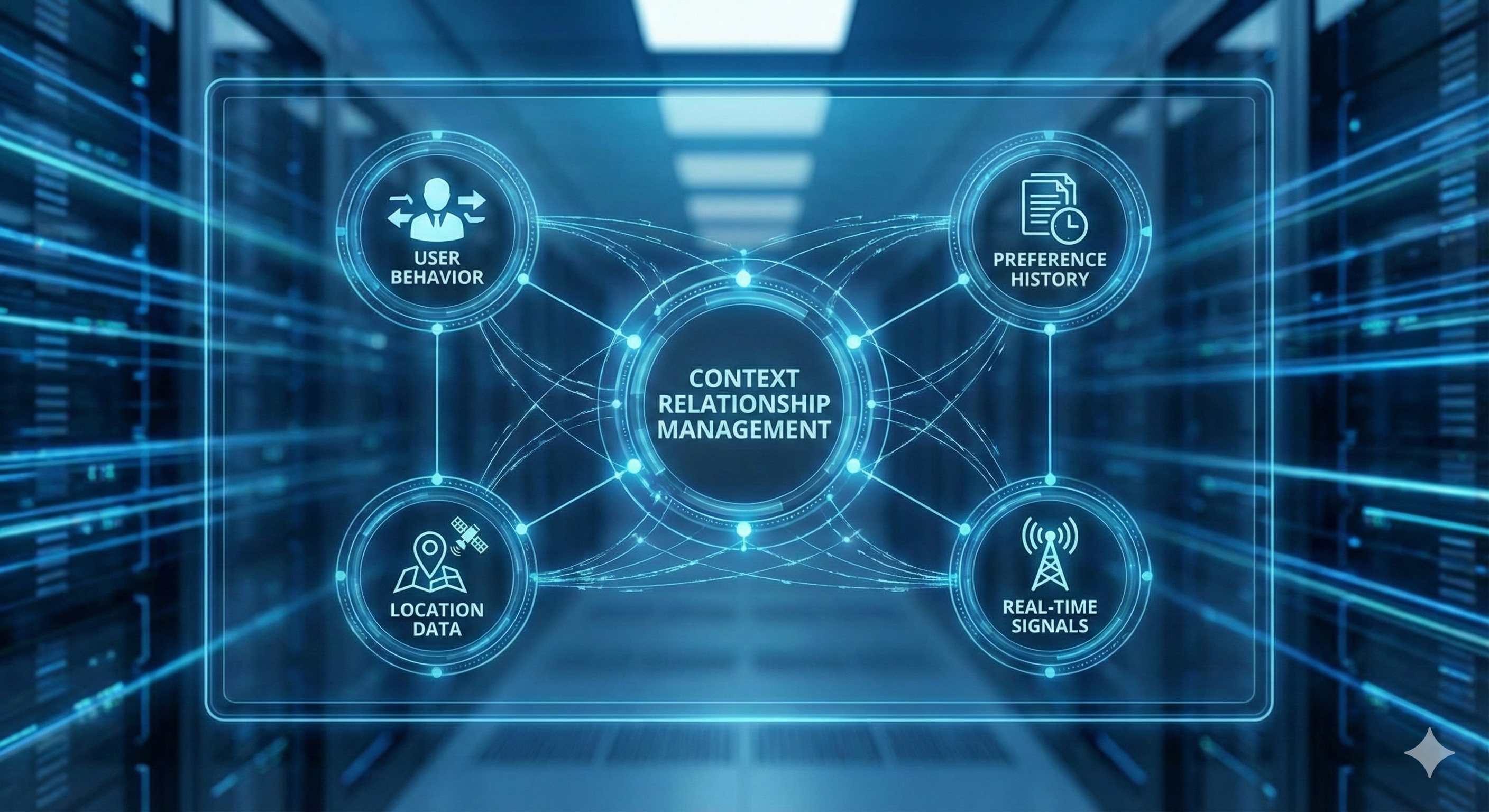
Salesboom's platform is architected for organizational scalability — growing seamlessly from 5 to 5,000 users without performance degradation, architectural disruption, or costly system replacements.
Whether you are a growing SMB deploying CRM for the first time or an established enterprise replacing a legacy on-premise system, Salesboom adapts to your current requirements and grows with your ambitions.
Strategic answers to the questions business leaders ask before selecting a CRM platform — and after experiencing CRM failure firsthand.
The most common root cause of CRM failure is treating CRM as a software purchase rather than a strategic transformation initiative. Organizations that select a platform before defining their strategy, mapping their processes, and securing executive alignment consistently underperform those that invest in organizational readiness first. Technology supports strategy — it never replaces it. Low user adoption, driven by poor UX design and workflow misalignment, is the single most reliable predictor of implementation failure once deployment begins.
Unlike traditional on-premise deployments that could span 12 to 36 months, Salesboom's cloud-native SaaS architecture and vertical-ready workflow templates enable most organizations to be fully operational within weeks. The exact timeline depends on organizational complexity, integration requirements, and the depth of process mapping involved — but the absence of hardware procurement, custom programming dependencies, and consultant-heavy configuration removes the primary drivers of extended deployment cycles.
Salesboom addresses user adoption at the architectural level, not as an afterthought. The platform features an intuitive interface designed around natural workflow patterns, role-based dashboards that surface relevant information immediately, an AI Copilot that reduces decision fatigue by suggesting next-best actions, mobile-first design for field teams, and automated data capture that minimizes manual entry burden. When employees experience immediate personal value from using the system, adoption becomes self-reinforcing rather than a management compliance effort.
Salesboom's subscription SaaS model starts at $14 per user per month, with no hidden fees, no hardware infrastructure costs, no consultant-dependency for ongoing changes, no upgrade fees, and no vendor lock-in. Quarterly feature updates, AI enhancements, and integration expansions are delivered at no additional cost. Compared to traditional on-premise CRM systems that compound costs through licensing, servers, maintenance, consultants, and periodic reimplementation, Salesboom's TCO represents a fundamentally lower and more predictable long-term investment.
Salesboom uses a configuration-over-customization architecture. Rather than requiring custom code to align the platform with business workflows, administrators configure workflow engines, automation rules, dashboards, and permission structures through guided interfaces — no programming required. This approach ensures all configurations remain upgrade-safe, allowing quarterly platform improvements to be applied without breaking existing operational setups. The result is a system that evolves with your business rather than one that freezes in place to protect fragile custom code.
Yes. Salesboom's cloud-native architecture scales seamlessly from 5 to 5,000 users without performance degradation, architectural redesign, or system replacement. The modular platform allows new functionality to be activated as organizational needs evolve. Role-based permissions, multi-language support, multi-currency capabilities, and open API connectivity ensure the platform accommodates growing complexity — international expansion, new business units, and evolving integration ecosystems — without requiring costly reimplementation cycles.
Stop inheriting the structural liabilities of traditional CRM and start with a platform engineered for adoption, scalability, and revenue growth from day one. Book a personalized demo and see how Salesboom eliminates every failure vector your competitors are still struggling with.
CRM failure is a structural problem — rooted in complex deployments, high total cost of ownership, fragile customization, low user adoption, and strategic misalignment — and Salesboom's cloud-native CRM platform was architected specifically to eliminate every one of these failure vectors. Our unified CRM + ERP SaaS model delivers rapid implementation, transparent subscription pricing, AI-powered automation, and continuous quarterly innovation that transforms CRM from a costly liability into a sustainable revenue growth engine. With 22+ years of proven success across 3,500+ businesses in 159 countries, Salesboom is the strategic infrastructure modern organizations choose when CRM failure is not an option.
Discover powerful CRM editions to scale your business efficiently.
A complete CRM suite with Marketing Automation, ERP integration, and Support tools — built for performance and value.
Explore ProfessionalFor large enterprises — automate workflows, unify data, and leverage analytics to drive strategic growth.
View EnterprisePerfect for small teams starting with CRM — manage leads, track sales, and boost productivity with simplicity.
Discover TeamDiscover why choose Salesboom, how to buy CRM, consulting services, implementation methodologies, and feature insights.
Learn why Salesboom is a trusted CRM partner for businesses worldwide.
Read our guide on how to buy CRM and make a smart investment decision.
Understand the differences in CRM build vs buy cost analysis for strategic decision-making.
Discover CRM consulting services to accelerate CRM strategy and ROI.
Learn about FastTrack implementation for accelerated CRM deployment.
Explore CRM training services to empower your team and boost adoption.
Learn about CRM implementation methodology for structured, predictable success.
Discover all CRM features including analytics, workflows, and automation.
Explore web self-service portal software to improve customer support and engagement.